Rubber Lining
Rubber Lining for Mining and Industrial Equipment
AU Industries is a South African rubber lining company based in Boksburg, Gauteng. We supply and install bonded rubber lining for pipes, tanks, chutes, pumps, and valves used in mining, minerals processing, chemical, and water-treatment plant. Rubber lining moves abrasion and corrosion off your steelwork and into a replaceable rubber layer — so the equipment lasts far longer and you renew the lining instead of the whole component.
Every job starts with the right compound. We specify the rubber type, hardness, and thickness against your actual operating conditions, line it in our Boksburg workshop or on-site, and inspect it before it goes back into service.
Why rubber line your equipment
Unlined steel in slurry or chemical service wears and corrodes fast — pipe bends, cyclone feeds, tank floors, and chute impact points fail first, driving repeat replacement cost and unplanned downtime. A correctly specified rubber lining absorbs that wear, resists chemical attack, and is far cheaper to renew than refabricating the equipment. It is the standard way to extend plant life across Southern African mines and processing operations.
Rubber lining compounds we supply
Natural rubber — 40 Shore (Red & Black)
Low abrasion-loss rubber for slurry pipelines, cyclone feeds, and pump casings. Designed for fine-particle abrasion where flexibility and resilience matter most. Our workhorse compound for general slurry duty.
Natural rubber — 60 Shore (Red & Black)
Harder, impact-resistant rubber for tanks, chutes, and hoppers handling coarser particles. Resists the cutting and gouging that damages softer linings in high-impact zones.
A38 Pink & premium 60 Shore Pink
In-house premium compounds for the most aggressive abrasion. A38 Pink extends wear life in heavy-abrasion zones; our premium 60 Shore Pink (high-silica) delivers cut resistance where sharp particles damage standard 60 Shore rubber.
Bromobutyl — 50 Shore
Chemical-resistant lining for acid plants, CIL/CIP tanks, and water-treatment vessels. Resists mineral acids, saltwater, and alkaline solutions where natural rubber is unsuitable.
Nitrile — 60 Shore
Oil- and fuel-resistant rubber for fuel storage, hydraulic systems, and hydrocarbon-exposed surfaces.
Custom compounds can be developed through our R&D department where catalogue compounds don't fit the duty.
Choosing the right compound
The correct lining depends on particle size, flow velocity, pH, temperature, and whether the failure mode is abrasion, impact, or chemical attack. Fine slurry abrasion suits 40 Shore; coarse, impact-loaded streams need 60 Shore or premium pink; acids and oils call for bromobutyl or nitrile. We run a site assessment before specifying so the lining is matched to the duty rather than over- or under-specified.
Lining thickness
Thickness is matched to the wear profile — typically 6mm for general slurry abrasion, stepping up to 10–12mm or more in high-wear zones such as pipe bends, reducers, and chute impact points where flow changes direction. We increase thickness locally rather than over-lining the whole component, keeping cost down without compromising service life.
What we line
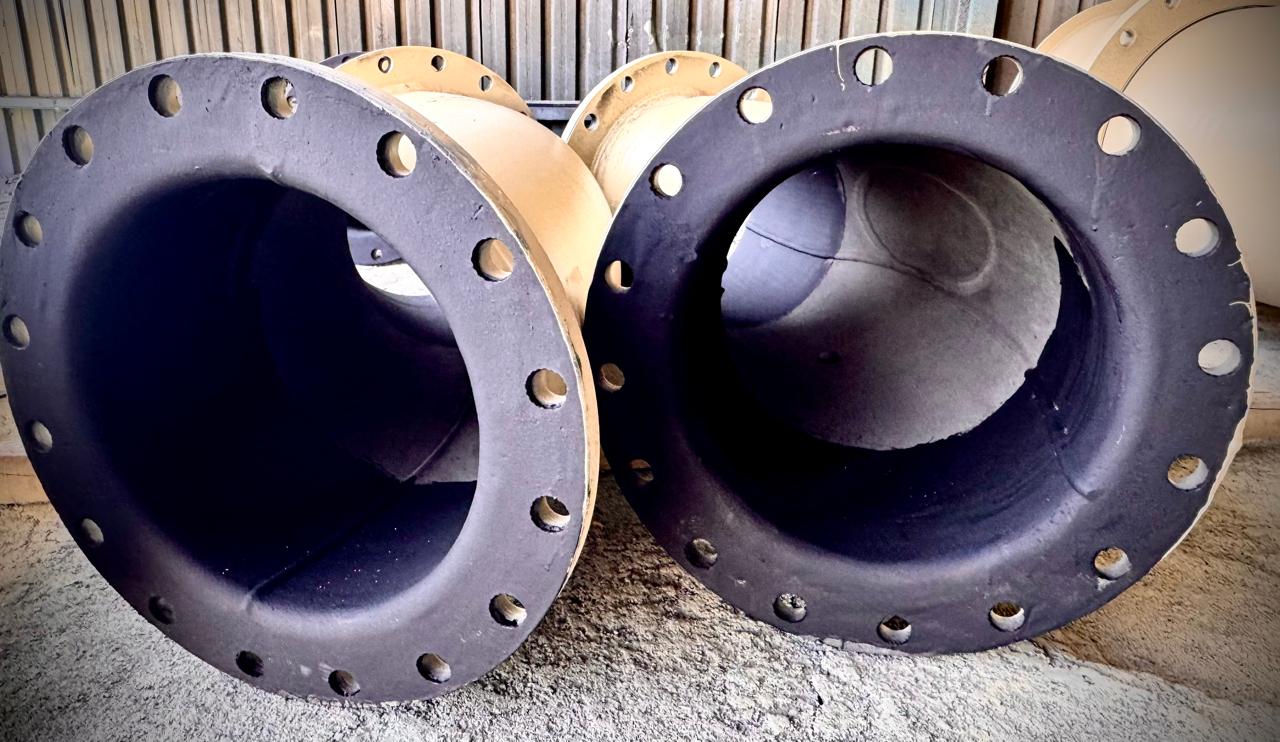
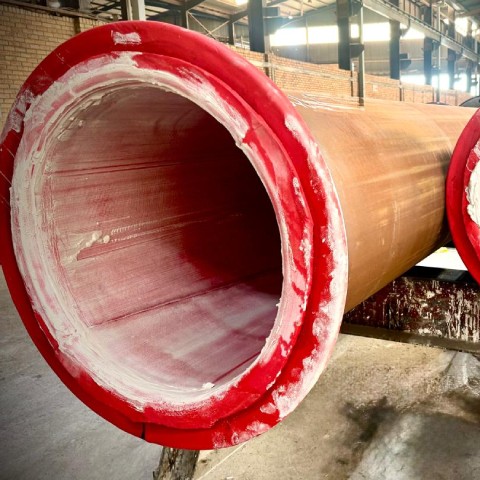
- Pipe lining — slurry lines, tailings lines, process-water piping. See our dedicated rubber lined mining pipework capability.
- Tank lining — leach tanks, CIL/CIP tanks, acid tanks, storage vessels
- Chute lining — transfer chutes, feed chutes, discharge points
- Pump lining — pump casings, impellers, volutes
- Valve lining — butterfly valves, knife-gate valves, check valves
For severe sliding-abrasion and high-impact duty, ceramic-embedded panels are specified as part of our industrial wear lining range.
Workshop and on-site rubber lining
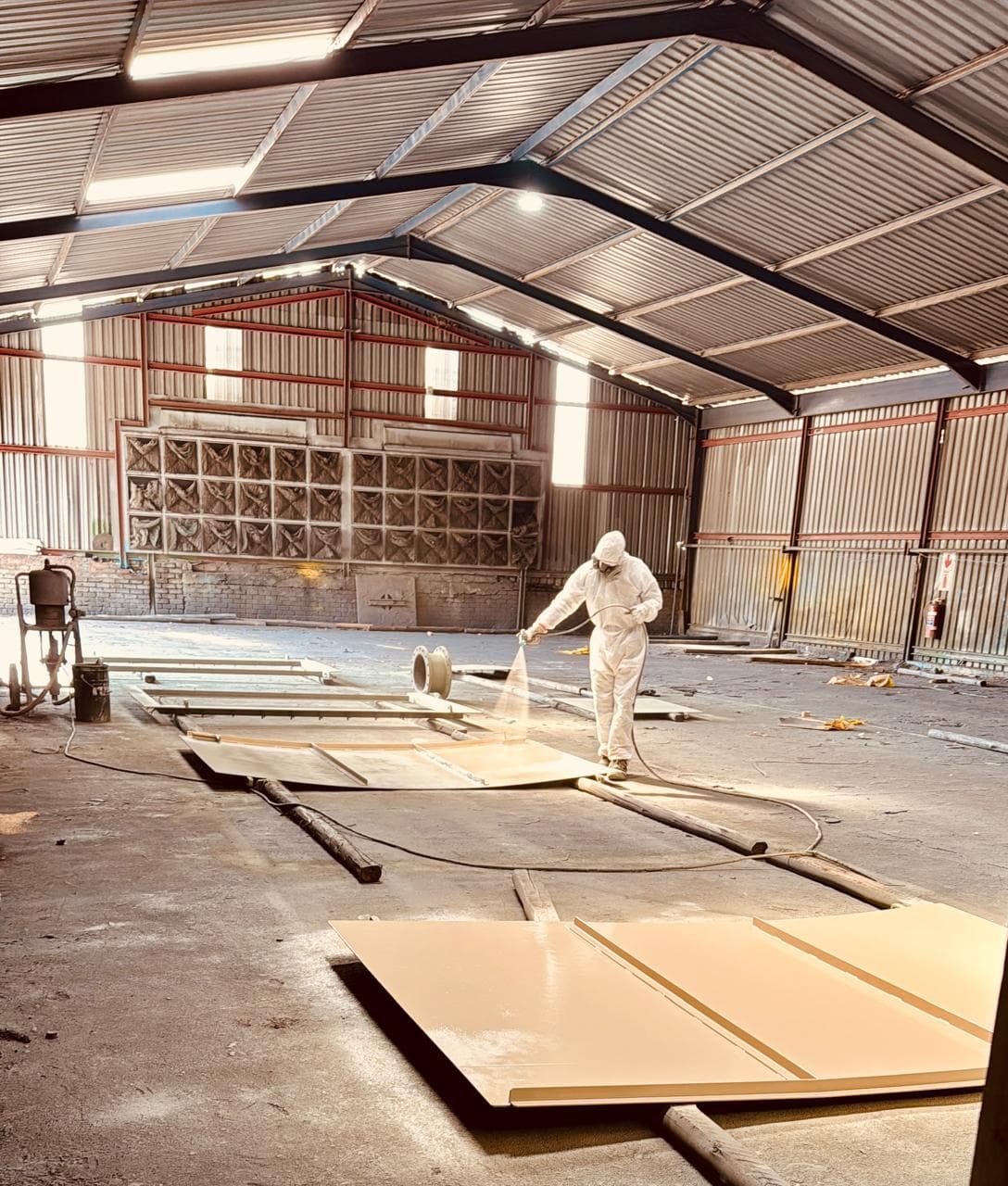
We line newly fabricated pipework, tanks, and fittings in our Boksburg workshop under controlled autoclave cure, and we re-line worn equipment that has reached the end of its previous lining life. Large fixed plant is lined on-site, with grit blasting, bonded application, and spark testing carried out at your operation.
Our rubber lining process
- Site assessment — we inspect the equipment and review operating conditions (particle size, pH, temperature, flow rate)
- Compound selection — we specify the correct rubber type, hardness, and thickness for the application
- Surface preparation — grit blasting up to SA 3 standard for proper adhesion
- Lining application — bonded rubber lining applied by experienced technicians
- Quality inspection — spark testing and visual inspection before handover
Industries and regions we serve
We rubber line for gold, platinum, coal, copper, uranium, and titanium operations, as well as chemical processing, water treatment, and general heavy industry. From our Boksburg facility we serve customers across Gauteng — Boksburg, Benoni, Germiston, and Johannesburg — and the Witbank / eMalahleni coal belt, with on-site project coverage throughout South Africa, Mozambique, Namibia, Zambia, Botswana, and Zimbabwe.
See our rubber lining projects for recent work across Southern African mines.
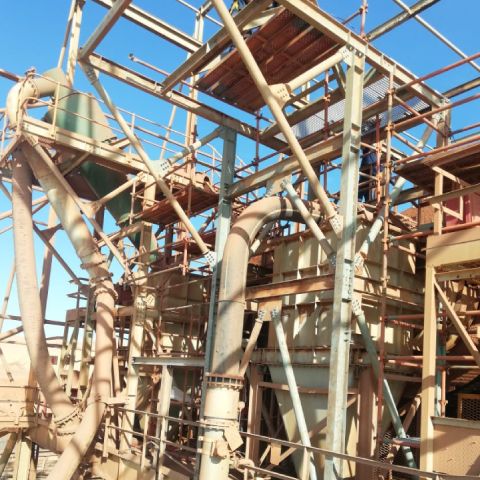
Rubber lining service areas
We rubber line for mining and industrial customers across Gauteng and the East Rand from our Boksburg facility: