HDPE Piping
HDPE Piping Solutions
AU Industries supplies and fabricates HDPE (High-Density Polyethylene) pipes and fittings for mining, water reticulation, and industrial piping systems. HDPE offers excellent chemical resistance, flexibility, and a long service life compared to traditional steel or concrete piping.
Products
HDPE Pipes
We supply HDPE pipes in sizes from 20mm to 1000mm diameter in various pressure ratings (PN6.3 to PN25). Available in PE80 and PE100 grades for different pressure and temperature requirements.
HDPE Fittings
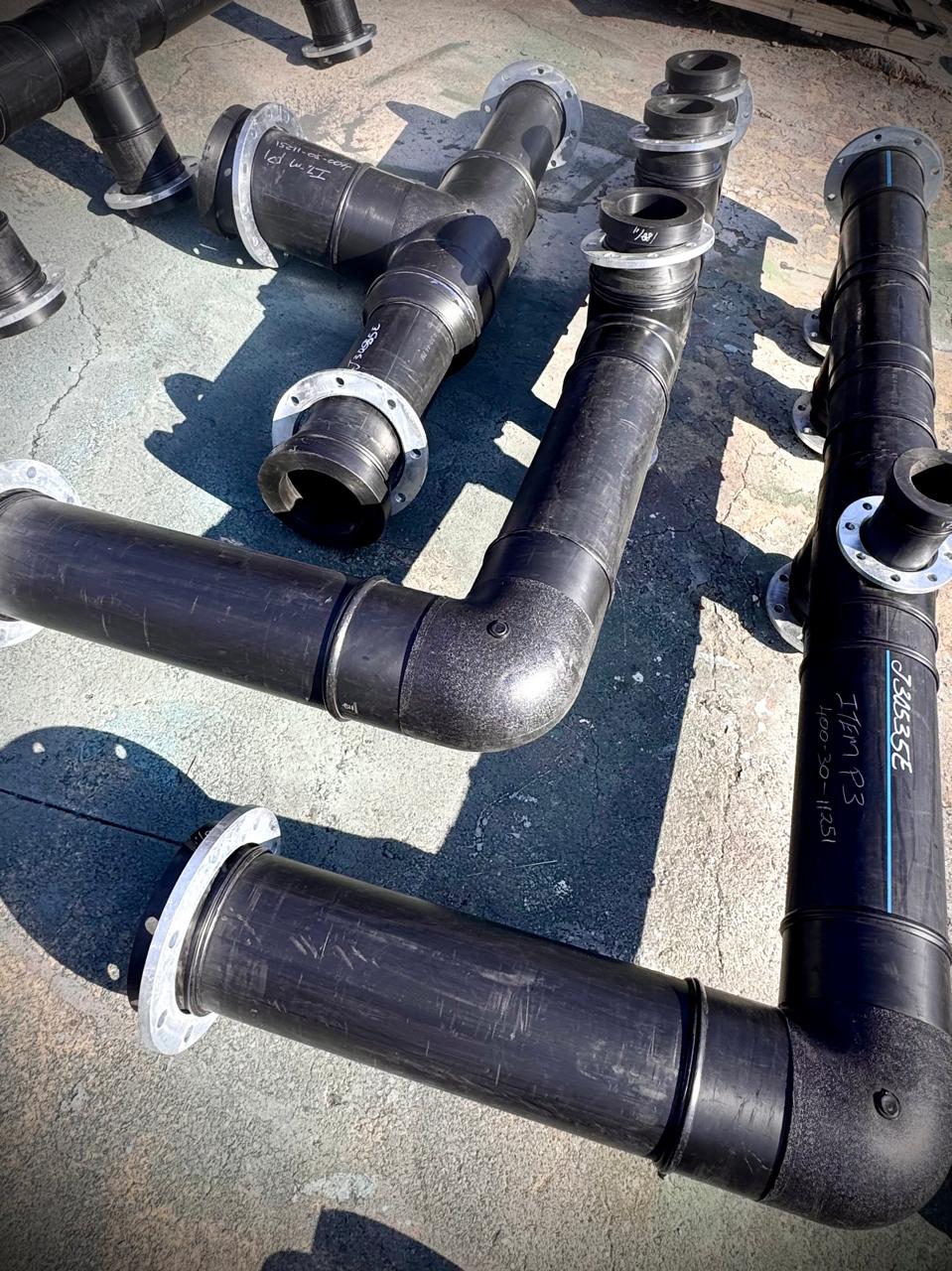
Complete range of butt-weld and electro-fusion fittings including elbows, tees, reducers, flanges, and stub ends. All fittings are manufactured to SANS 1533 / ISO 4427 standards.
Fabricated Spools
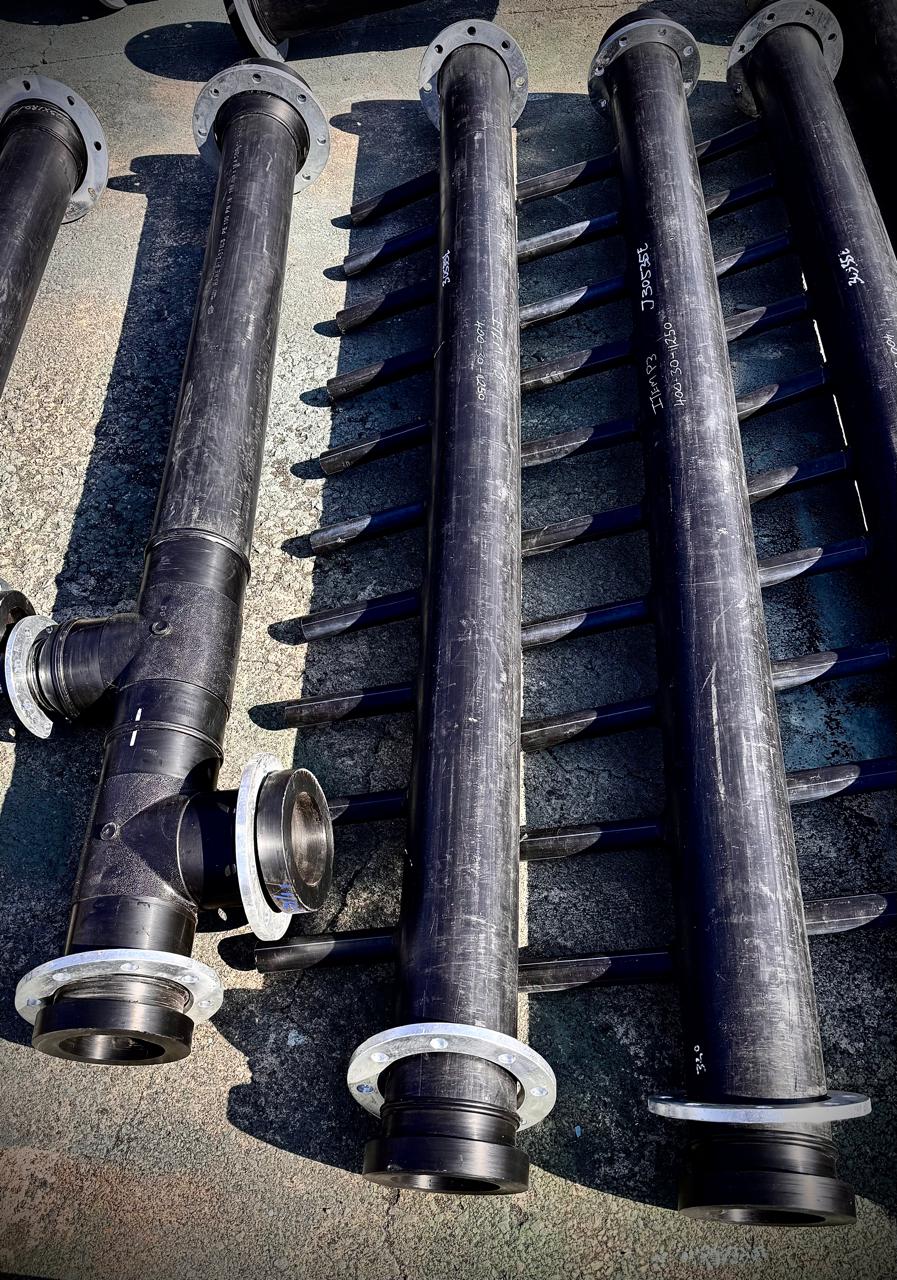
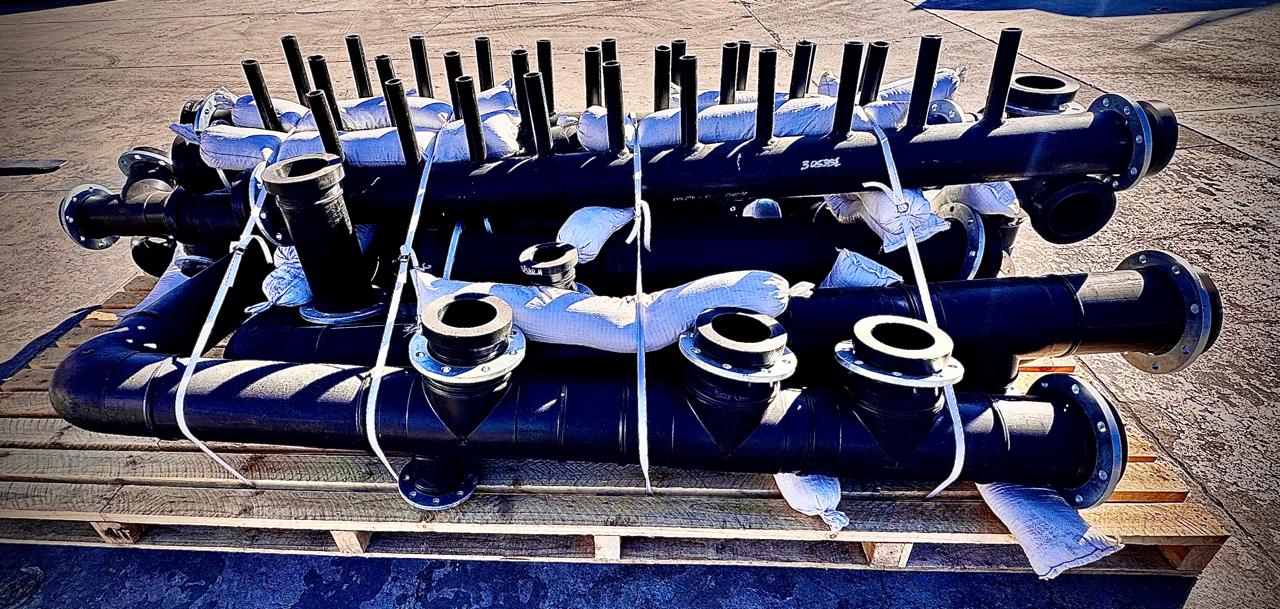
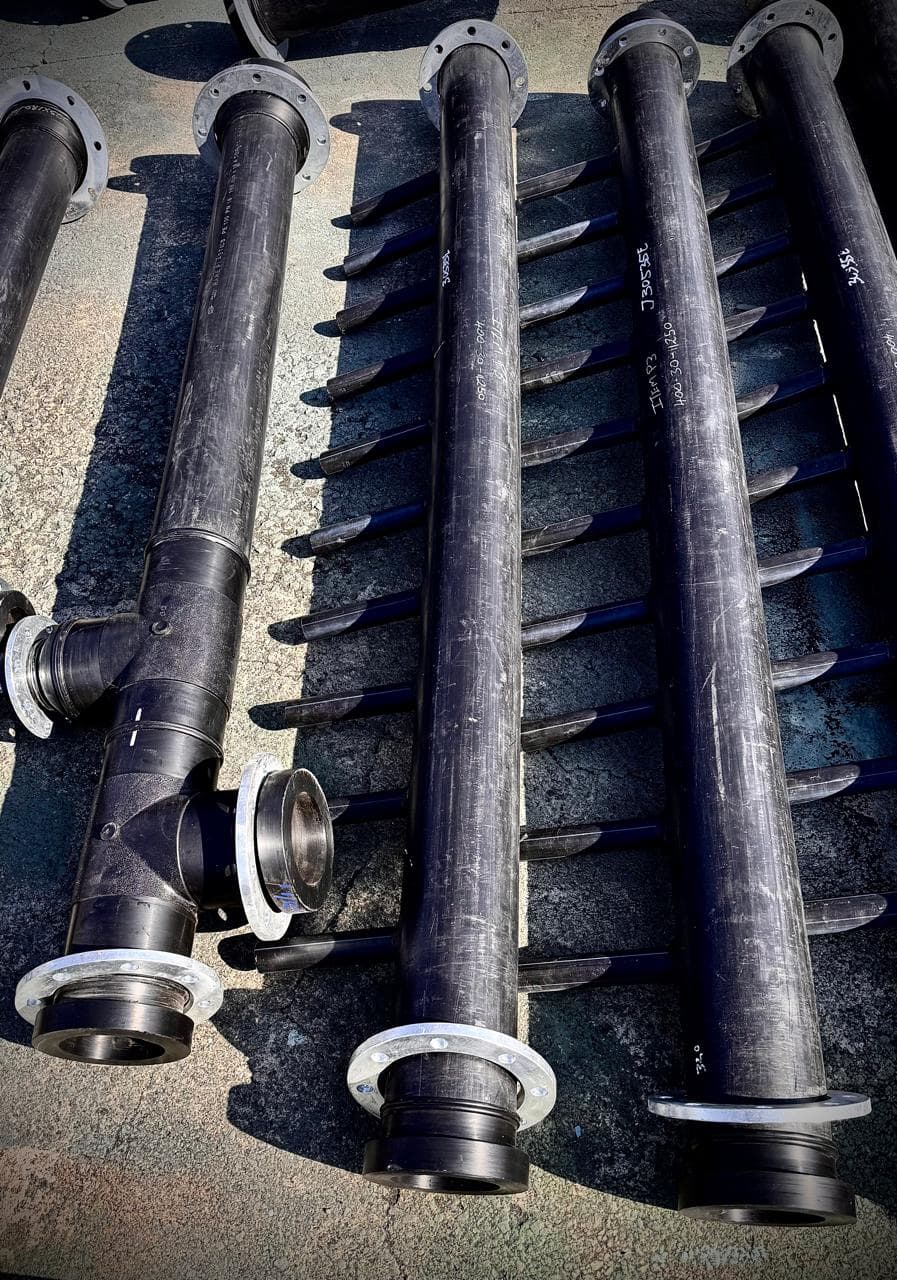
We fabricate custom HDPE pipe spools and manifolds to customer specifications, including multi-outlet headers, Y-pieces, and complex branch configurations.
Applications
- Mining — tailings lines, process water, slurry transport, dewatering
- Water reticulation — potable water mains, irrigation, bulk water transfer
- Sewerage — gravity sewer mains, rising mains, stormwater
- Chemical — chemical transfer lines, brine lines, acid drainage
- Marine — ocean outfalls, intake lines, dredge discharge
Advantages of HDPE
- Corrosion resistant — will not rust, rot, or corrode
- Flexible — accommodates ground movement and thermal expansion
- Leak-free joints — butt-welded joints are as strong as the pipe itself
- Long service life — 50+ year design life under normal conditions
- Lightweight — easier to handle and install than steel or concrete
Jointing and Fabrication
HDPE is joined by fusion rather than mechanical couplings, which is why it is favoured for buried and high-pressure service:
- Butt fusion — the ends of two pipes are heated and pressed together to form a joint as strong as the pipe wall, with no leak path.
- Electro-fusion — fittings with an integral heating element are used where butt fusion is impractical, such as tie-ins and repairs.
We pre-fabricate spools, headers, and branch configurations in our Boksburg facility so that on-site work is reduced to a small number of field joints — faster installation and fewer opportunities for error.
HDPE for Abrasive Slurry
HDPE has naturally good abrasion resistance, which is one of the reasons it is widely used for mine tailings and slurry transport. On long abrasive lines, service life can be extended by specifying a heavier wall class and by periodically rotating the pipe so wear is spread around the bore rather than concentrated at the invert. Where the duty is too aggressive for HDPE on its own, we also supply rubber-lined steel and ceramic-lined steel pipework as alternatives — talk to us about the right material for your slurry.
Frequently Asked Questions
What is the difference between PE80 and PE100? Both are HDPE grades. PE100 has a higher minimum required strength, so for the same pressure rating it allows a thinner wall (more flow) or a higher pressure rating at the same wall thickness. We help you select the grade and pressure class for your duty.
Can you fabricate custom spools and manifolds? Yes. We fabricate custom HDPE spools, multi-outlet headers, Y-pieces, and complex branch configurations to drawing in our Boksburg facility.
Can HDPE handle abrasive slurry? HDPE has good inherent abrasion resistance and is widely used for tailings and slurry lines. Service life can be extended with a heavier wall class and by rotating the pipe to spread wear. For the most aggressive duties we also offer rubber-lined steel and ceramic-lined steel pipework as alternatives.
Related Projects
Related Services