The wrong lining doesn't fail because the material is bad — it fails because it was chosen for the wrong wear mechanism. Before you compare quotes, work out what is actually destroying your equipment: fine sliding abrasion, coarse high-impact particles, or corrosion. That answer usually picks the material for you.
How each material actually fails
- Sliding (fine) abrasion — fine, fast particles polishing a surface. Resilient materials win because they flex and let particles glance off.
- Impact / gouging — coarse, heavy particles dropping or tumbling. Harder, tougher surfaces win because they resist cutting and chunking.
- Corrosion / chemical attack — acids, brine and process water eating steel. Here the lining's job is a chemical barrier, not abrasion resistance.
Most real duties are a mix, which is why the best answer is often a combination.
Rubber lining — the workhorse for slurry abrasion
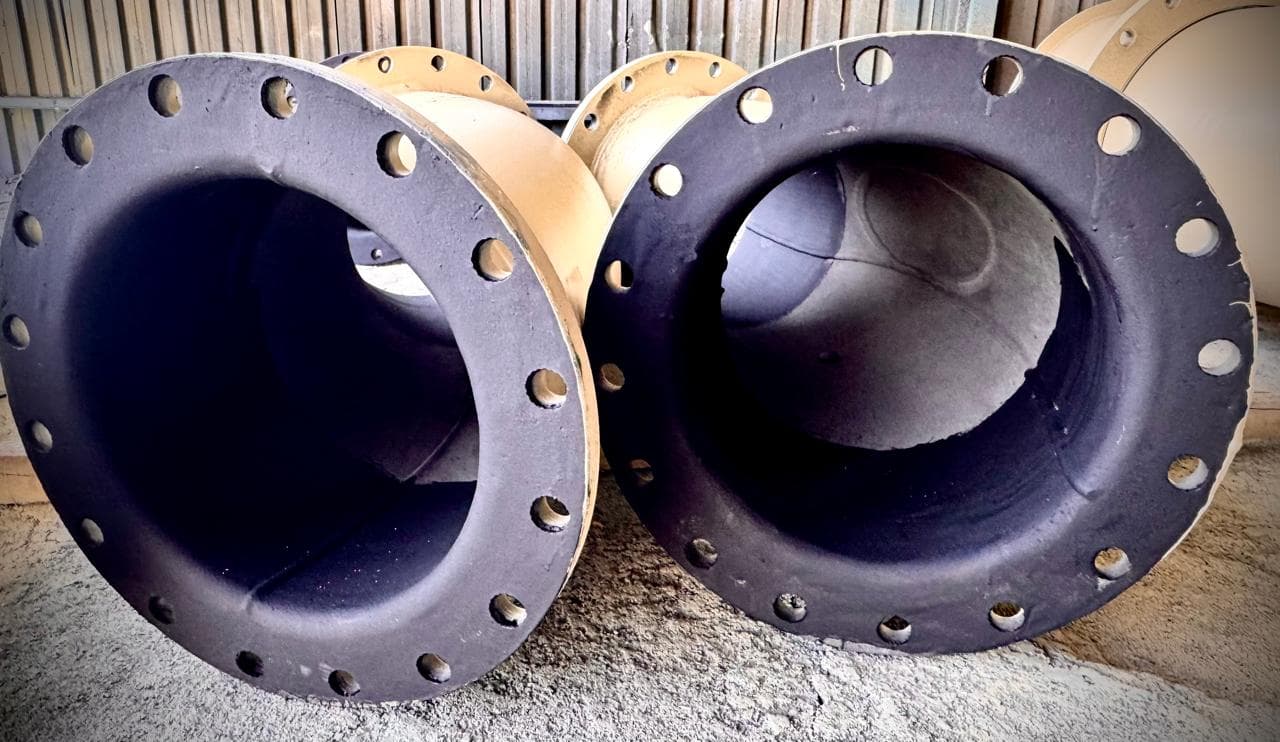
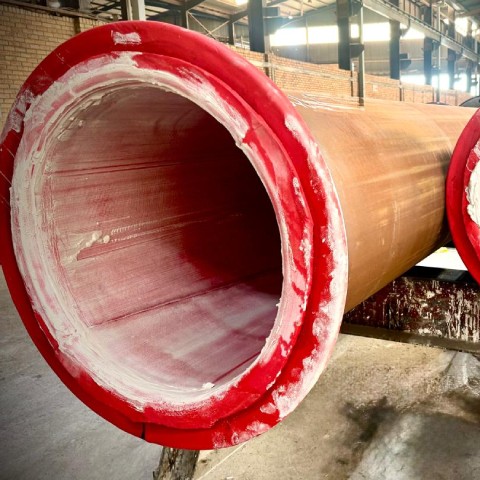
Natural rubber lining is the default for fine, high-velocity slurry — cyclone feeds, mill discharge, pump casings and slurry pipework. Its resilience lets fine particles bounce off rather than cut, and it bonds to grit-blasted steel for a long, leak-free service life. AU 40 Shore is the standard slurry compound; for coarser, higher-impact streams a 60 Shore or our premium A38 compound trades a little flexibility for cut and tear resistance.
Rubber also has a chemical-resistant side: Bromobutyl for acid and CIL/CIP duty, Nitrile for oils and hydrocarbons.
Ceramic embedded rubber — for severe sliding wear
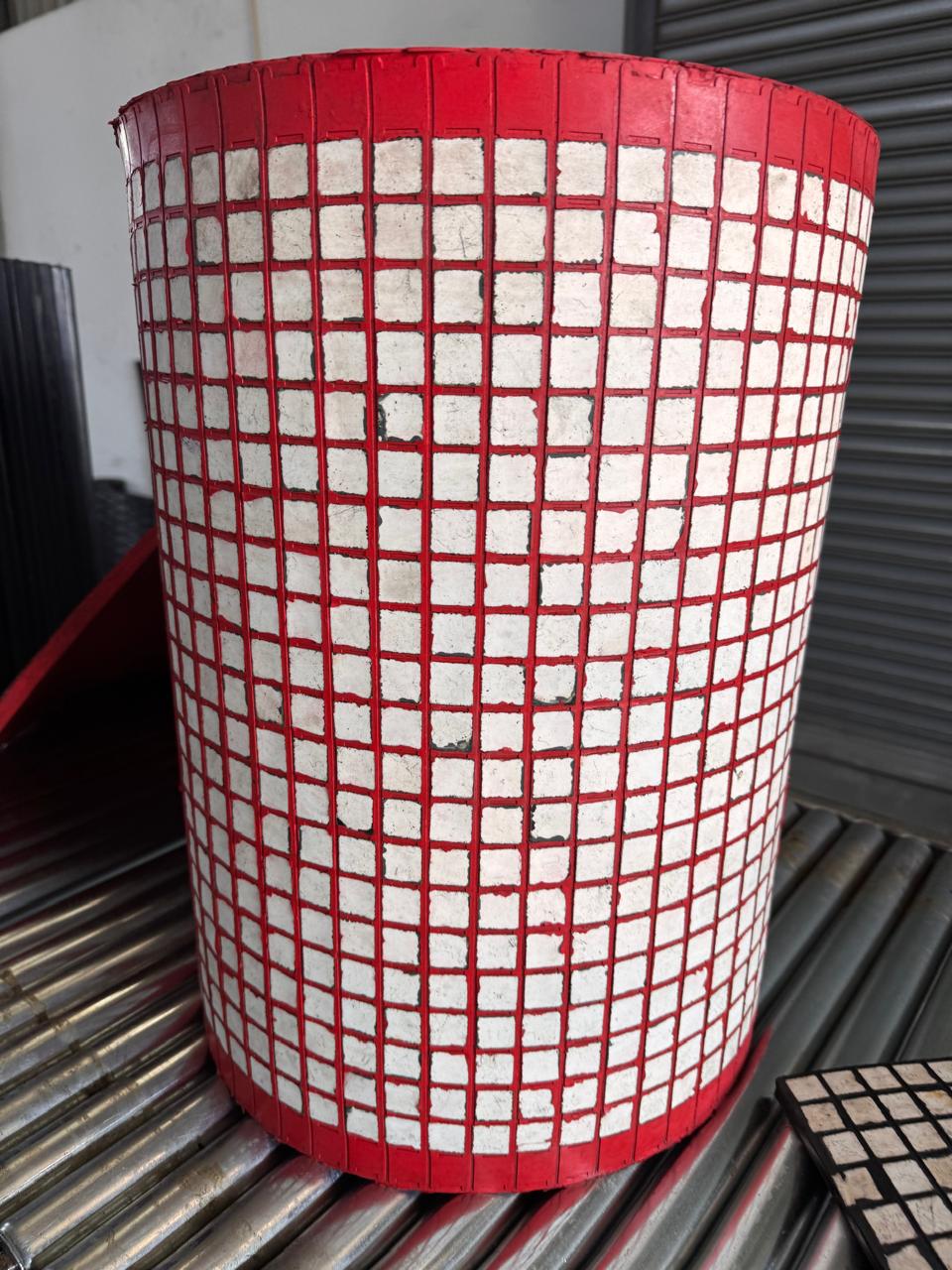
Where plain rubber wears too fast — aggressive transfer points, chute walls, hopper liners — ceramic embedded rubber panels combine the impact tolerance of rubber with the abrasion resistance of alumina ceramic tiles. The tiles take the sliding abrasion while the rubber matrix absorbs impact, so the panel outlasts plain rubber on the most punishing duties. It costs more per square metre, so it pays where rubber's replacement interval is short enough to hurt production.
HDPE — corrosion resistance and flow, not impact
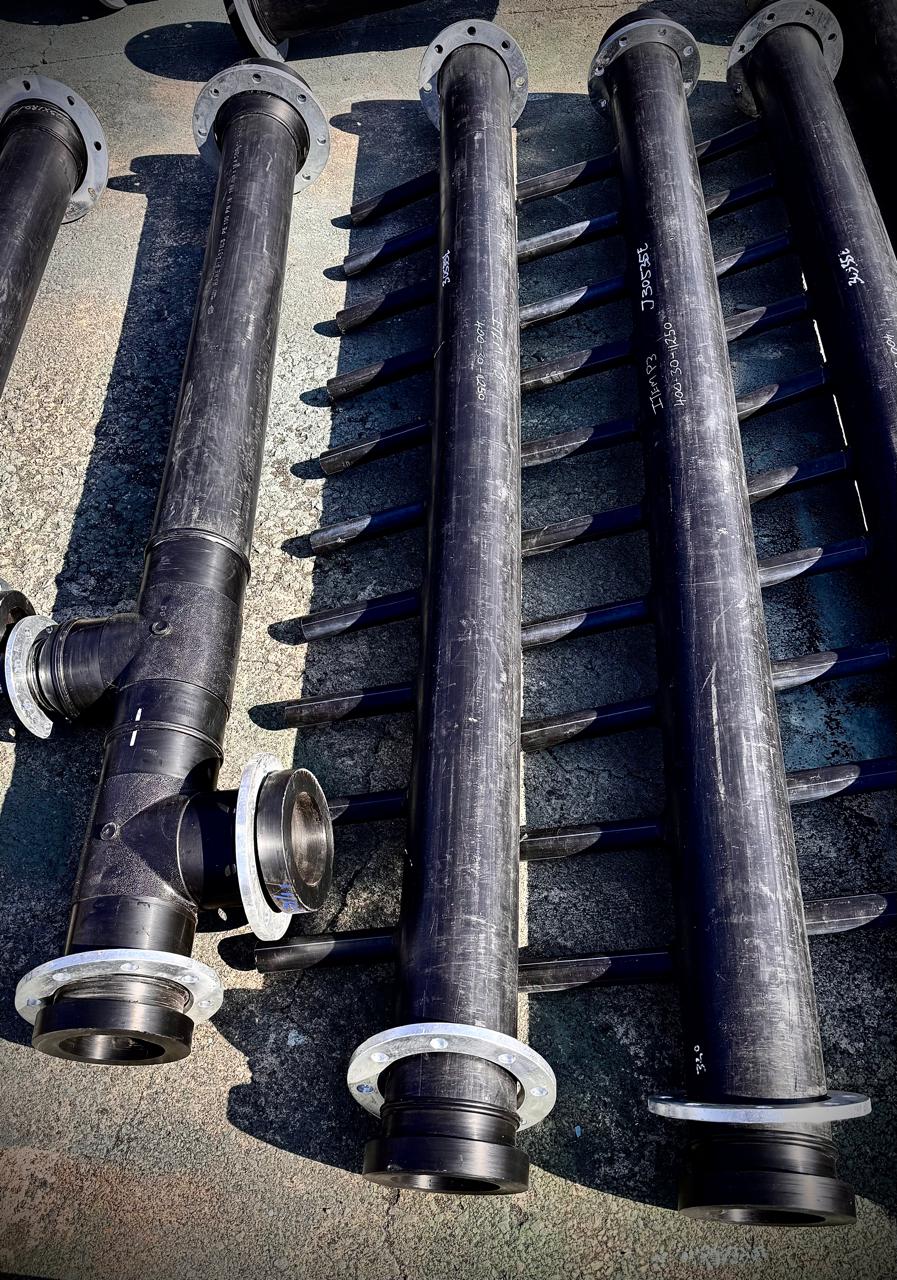
HDPE piping is the right call when corrosion and a long, leak-free buried life matter more than impact resistance: tailings lines, process water, dewatering and slurry transport. It will not rust or corrode, its butt-welded joints are as strong as the pipe wall, and it has good inherent abrasion resistance for many slurries. For the most aggressive slurries we supply rubber-lined steel and ceramic-lined steel as alternatives where HDPE alone would wear at the invert.
A quick decision guide
- Fine slurry, pipes and pumps → rubber lining (40 Shore).
- Coarse, high-impact chutes and hoppers → 60 Shore rubber, or ceramic embedded rubber at the worst points.
- Acid / chemical service → Bromobutyl rubber lining.
- Buried water, tailings, dewatering → HDPE.
- Mixed duty → combine: HDPE or steel pipework with rubber or ceramic lining at the wear-critical sections.
Not sure which way to go?
Send us your process conditions — particle size, slurry concentration, pH and flow rate — and we will recommend the material, compound and thickness, and quote it from our Boksburg facility. The cheapest lining is the one you do not have to replace next shutdown.